
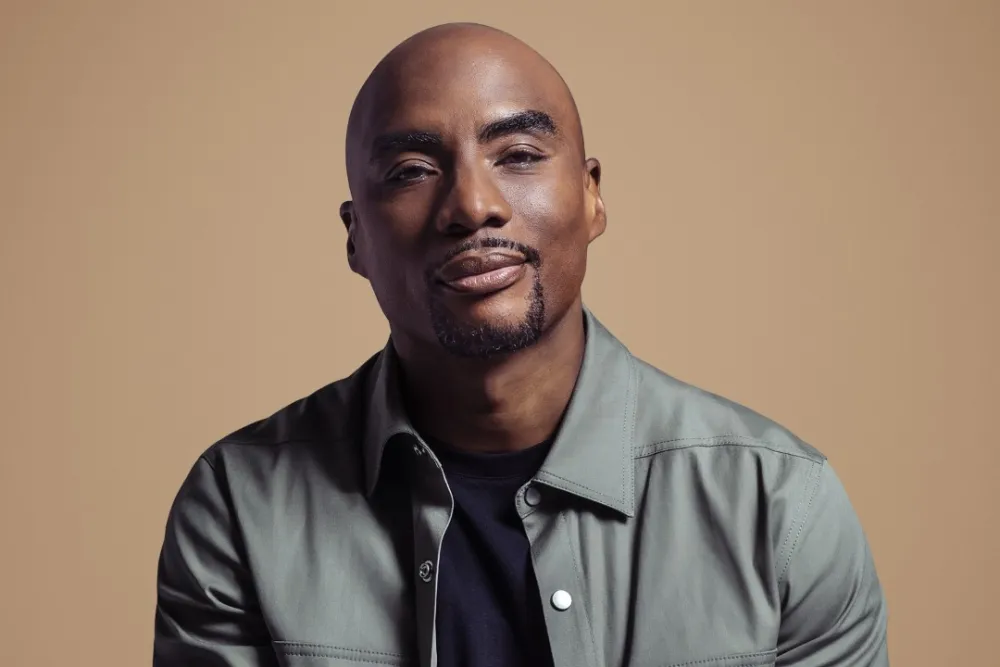

I’ve long believed that Charlamagne tha God was only scratching the surface of what he could ultimately become. Over the years, we’ve interviewed him more times at extent than any other industry trade, and from where I sit, there are very few figures in modern radio or media more deserving of the success he’s achieved.
Charlamagne has consistently used his platform to, for one thing, support Black business, particularly within the radio and media space. What separates him from many of his predecessors is his willingness to publicly acknowledge his own shortcomings while actively helping others work through theirs. That level of transparency, paired with mentorship, has not always been common at the highest levels of broadcasting.
Historically, Black national announcers and Black radio owners have kept their salaries private. One industry veteran once told me it was simple: once people know how much you make, they expect a piece of it. But the downside to that silence is just as real. When the numbers are never visible, the possibilities are harder to imagine.
If people never see those who look like them making meaningful moves at the top, it becomes far more difficult to inspire the next generation to aim higher. In that context, Charlamagne’s moment is bigger than a contract. It’s a signal.
A historic deal, but not a typical one
In December 2025, Charlamagne signed a five-year extension with iHeartMedia reportedly valued at $200 million. On an annualized basis, the deal approaches $40 million per year, making it the largest publicly disclosed audio contract ever for a Black radio-originated personality.
The size of the deal is historic, but the structure is what truly sets it apart.
Charlamagne will continue as a co-host of The Breakfast Club, one of the most influential morning programs in the country. Beyond that, the agreement formally positions him as a strategic executive partner, with expanded authority to develop original intellectual property, cultivate talent, and build live and digital businesses within the iHeartMedia ecosystem.
For decades, even the highest-paid radio personalities were compensated primarily as talent. Their value was measured by ratings and airtime. Creative control, ownership, and long-term scalability were rarely part of the equation. This deal reflects a clear departure from that model.
The Black Effect as the foundation
A central pillar of the agreement is Charlamagne’s continued leadership of The Black Effect Podcast Network, the joint venture he launched with iHeartMedia in 2020.
As of late 2025, the network includes more than 60 podcasts and generates approximately 11 million monthly downloads. Its slate spans comedy, culture, sports, wellness, and business, making it one of the most expansive Black-led audio networks in the industry.
Charlamagne has said his goal is to build “the BET of podcasting.” Whether that comparison ultimately proves exact is less important than what it represents. Radio contracts have rarely focused on infrastructure. The Black Effect is not built around a single voice. It’s designed as a portfolio that can grow, evolve, and outlast any one personality.
A hybrid future for radio distribution
The deal also aligns with iHeartMedia’s broader licensing agreement with Netflix, introducing a new distribution model for The Breakfast Club.
Beginning in 2026, Netflix will exclusively stream video versions of the show, while iHeartMedia retains all audio-only distribution rights. The program will remain accessible through terrestrial radio, podcast platforms, and the iHeartRadio app, while video becomes a premium extension.
It’s a structure that reflects where radio is headed, not where it’s been. Audio remains the foundation, but value is increasingly created through multiplatform reach.
How this compares historically
In the context of publicly reported Black radio earnings, Charlamagne’s deal stands apart.
At his peak, Tom Joyner stated he earned approximately $14 million per year from The Tom Joyner Morning Showduring its height in national syndication. That figure ranked among the highest ever reported for a Black radio host and came almost entirely from a traditional radio model.
Steve Harvey is estimated to earn $40 to $50 million annually today, but that total spans radio, television, production ventures, books, and endorsements. His radio hosting salary alone is generally estimated around $20 million per year.
Charlamagne’s annualized $40 million figure is different. It is anchored primarily in audio and reflects the added economic weight of podcasting, IP ownership, and executive participation rather than reliance on television crossover.
Why deals like this have been rare
For much of radio’s history, Black personalities helped define formats, build audiences, and drive advertising revenue, particularly in urban radio. Yet those contributions rarely translated into ownership, equity, or lasting institutional control.
Many influential Black hosts came up during periods of consolidation, when leverage was limited and transparency was rare. Contracts were negotiated market by market. Salaries were kept quiet. Syndication models concentrated power with parent companies, not personalities.
When terrestrial radio’s economics tightened, salaries were reduced, shows were canceled, and long-term value largely remained with corporations rather than creators. Clear pathways for hosts to evolve into executives or partners were limited.
Charlamagne’s deal reflects a break from that history. Compensation is tied not only to performance, but to building and scaling an ecosystem that includes podcasts, talent development, and cross-platform distribution.
What it signals
Even at roughly $40 million per year, Charlamagne’s earnings remain below the industry’s highest benchmark, Howard Stern, whose SiriusXM contracts have reached far higher totals. Still, Charlamagne now operates in a tier that Black radio personalities have historically been excluded from.
More importantly, the deal reflects a shift in how power is assigned in audio. Charlamagne is no longer valued solely as a voice. He is valued as infrastructure.
For an industry long shaped by Black creativity but slow to grant Black ownership, this agreement represents a meaningful recalibration. It suggests that the future of radio’s highest earners may be defined less by airtime and more by who controls the systems built around it.
Kudos to Charlamagne, and continued success.