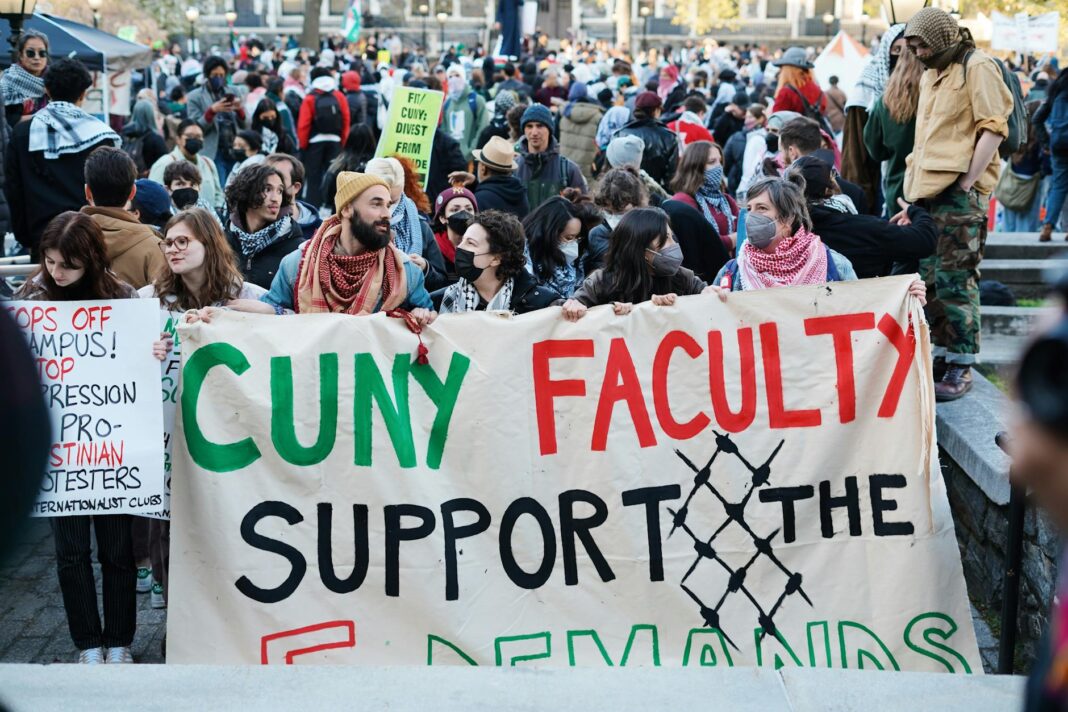
USC Faculty Rally Against Trump’s Education Compact
The University of Southern California is witnessing a significant uproar among its faculty members in response to a recently introduced education compact by the Trump administration. This compact has sparked concerns that it could shift the university’s academic environment to the right, undermining decades of progress in liberal education and academic freedom. The stakes are high, and the discussions surrounding this issue are anything but trivial.
Special Meeting Sparks Heated Debate
In a special meeting convened by the USC Academic Senate, faculty members expressed their discontent and apprehensions regarding the implications of the compact. The gathering was charged with emotion and urgency, as educators from various departments came together to voice their concerns. Many faculty members articulated that the compact’s alignment with conservative ideologies could threaten the university’s commitment to inclusivity and open inquiry. This isn’t just about politics; it’s about the very fabric of higher education and the principles that have guided institutions like USC for generations.
The Compact’s Controversial Provisions
The education compact presented by the Trump administration includes provisions that many faculty members see as politicizing education and increasing government oversight over academic institutions. Critics argue that such measures could lead to a chilling effect on faculty and student expression, creating an environment where dissenting opinions are discouraged. The compact’s emphasis on promoting conservative values raises alarms about the potential erosion of academic independence. Faculty members are concerned that this could translate into a curriculum that favors conservative perspectives while marginalizing liberal viewpoints, ultimately compromising the quality and integrity of education.
Faculty Voices Against the Compact
During the meeting, numerous faculty members voiced their concerns passionately. They emphasized the importance of maintaining a balanced and free academic environment where all perspectives are welcomed. Professors from various disciplines underscored the risk of alienating students and educators who do not align with the proposed ideological framework. One professor noted, “Our duty as educators is to challenge students to think critically and engage with a spectrum of ideas. This compact doesn’t just threaten our job; it threatens the very essence of what we do.” The overwhelming sentiment was one of resistance to any attempts to infringe on the university’s autonomy and academic integrity.
The Wider Implications for Higher Education
This situation at USC is not an isolated incident. It reflects a broader trend in higher education where political pressures are increasingly influencing academic policies and practices. Universities across the country are grappling with similar challenges, as external forces seek to sway the curriculum and dictate the discourse within academic settings. The faculty’s pushback serves as a crucial reminder of the need for vigilance in protecting the sanctity of academic spaces. As universities grapple with external pressures, the fight for academic freedom and the preservation of diverse viewpoints remains paramount.
Potential Paths Forward
So, what are the potential paths forward for USC and similar institutions facing these pressures? Faculty members are calling for a united front, advocating for policies that safeguard academic freedom while fostering an environment of inclusivity and respect for diverse opinions. They suggest that universities should actively engage in dialogue with policymakers to ensure that education remains an independent and critical enterprise. Moreover, creating awareness among students and the broader community about the implications of such compacts is vital for generating support and resistance against potential encroachments on academic freedom.
Questions
What could be the long-term impact of the compact on academic freedom at USC?
How might other universities respond to similar educational compacts?
What steps can faculty take to ensure diverse viewpoints are preserved in academia?